By Arvin Sahaym, The Graduate School
Marwa Mahmoud, a recent graduate of the Master of Science in Environmental Science program at Washington State University (WSU), has been awarded a prestigious Fulbright U.S. Student Program award to conduct research on the effective management strategies for at-risk wildlife species in New Zealand. She will collaborate with New Zealand’s Department of Conservation to study extinction risks for the Tara iti, or New Zealand Fairy Tern—one of the world’s most at-risk birds. Her project will use Structured Decision Making (SDM) to identify extinction risks for the Tara iti and propose feasible management techniques, including recovery for this endangered bird.
Originally from Issaquah, Washington, Mahmoud’s academic journey has taken her deep into the Cascade mountains of the Pacific Northwest and soon across the globe. She earned her bachelor’s degree in environmental studies with a minor in environmental science and natural resource management from the University of Washington in 2020 and completed her master’s degree at WSU in May 2025.
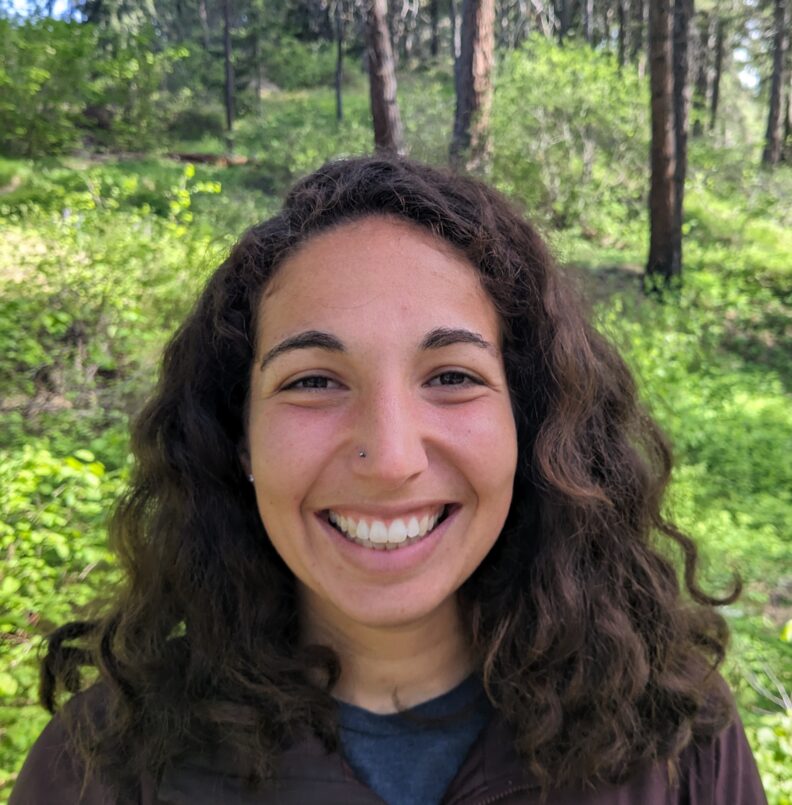
Marwa Mahmoud
At WSU, Mahmoud primarily worked in Dr. Daniel Thornton’s Mammal Spatial Ecology and Conservation Lab, focusing on carnivore ecology in Oregon’s Cascade Mountains. Her research centered on identifying the contemporary distribution of the Sierra Nevada red fox and evaluating the most effective methods for detecting this elusive species as well as its environmental associations. Currently, she is working with her advisor, Dr. Thornton, and the Woodland Park Zoo as a field researcher for the Cascades Carnivore Monitoring Program. This project is a long-term monitoring program to document wolverines and lynx in Washington’s Cascades. “My advisor, Dr. Thornton, is a leading expert in carnivore research in the Pacific Northwest and working in his lab gave me the opportunity to contribute to cutting edge research in wildlife and conservation ecology,” she said.
I’ve always been passionate about wildlife ecology, conservation, and bridging the gap between research and policy.
It was Mahmoud’s graduate education at WSU, along with her prior educational background and her passion for wildlife ecology, conservation management, and policy development, which inspired her Fulbright proposal. “I’ve always been passionate about wildlife ecology, conservation, and bridging the gap between research and policy,” she said. “But learning about how Structured Decision Making (SDM) provides a quantitative approach to management decisions from Dr. Sarah Converse at WSU opened up a whole new perspective on managing and protecting species. SDM will help me develop more effective decision-making approaches to aid recovery efforts for the Tara iti by identifying extinction risks and evaluating management strategies. I’m excited to apply SDM for the Tara iti in collaboration with New Zealand’s Department of Conservation.” Dr. Converse, the Unit Leader for the U.S. Geological Survey’s (USGS) Washington Fish and Wildlife Research Unit, is a visiting faculty member who teaches joint courses between WSU and the University of Washington.
“My long-term goal is to work at the intersection of environmental research and policy, particularly in public land management,” Mahmoud said. “I aspire to help conserve culturally and ecologically important lands around the world and especially in the Pacific Northwest.” She is also dedicated to community building. During her time at WSU, she served as the School of the Environment’s faculty representative in the Graduate Student Association, where she organized events and advocated for graduate student needs.
Outside of academia, Mahmoud finds joy in the natural beauty of the Palouse. “I love hiking at Moscow Mountain, biking the farm roads, and spending sunny days at Sunnyside Park in Pullman,” she said. “But my favorite place is Kamiak Butte in the spring—those wildflowers are incredible.” She also enjoys reading books of diverse genres, cooking various recipes, and playing board games.
As Marwa Mahmoud prepares for her research abroad, she reflects on her journey from the Cascade Mountains to the shores of New Zealand. “The Cascades will always be home, but I am excited to get my feet on the ground in New Zealand,” she noted with a smile. “I’m ready to immerse myself in a different ecosystem, but under the same umbrella, with the goal of conserving wildlife around the world.”